If you have ever managed a Commercial and Industrial (C&I) solar project, you already know the underlying frustration of the design phase. You send a team out to survey a massive commercial facility, take hundreds of manual measurements with tape measures or handheld lasers, and head back to the office. Then the nightmare begins: dealing with disjointed software, struggling with manual shading analysis, and carrying the constant fear that a single miscalculation will lead to a costly installation error on site.
The reality of the modern renewable energy sector is that traditional workflows are no longer enough. To eliminate rework, accelerate project timelines, and ensure profitable margins, leading engineering teams are transitioning away from manual drafting and adopting specialized commercial solar engineering software.
At Render-a, we have spent years analyzing the exact friction points that solar engineers face daily. Here is how a software-driven engineering workflow from rapid drone data capture to final bankable design is completely transforming how C&I PV projects are executed.
The High Cost of Inaccurate Site Data
Most solar design errors do not happen because engineers lack skill or experience; they happen because the foundational data they are working with is fundamentally flawed. Relying on outdated satellite imagery or manual roof measurements often results in inaccurate module placements. When the installation crew arrives on site, they suddenly find that the HVAC units are larger than expected, or the parapet walls cast shadows that were completely ignored in the preliminary design phase.
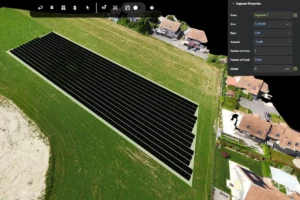
This problem isn’t just limited to standard flat roofs. Whether you are dealing with complex industrial rooftops or large-scale ground mounts requiring advanced 3D land surveying, precision is non-negotiable. This is where true engineering precision needs to step in, bridging the gap between physical reality and digital planning.
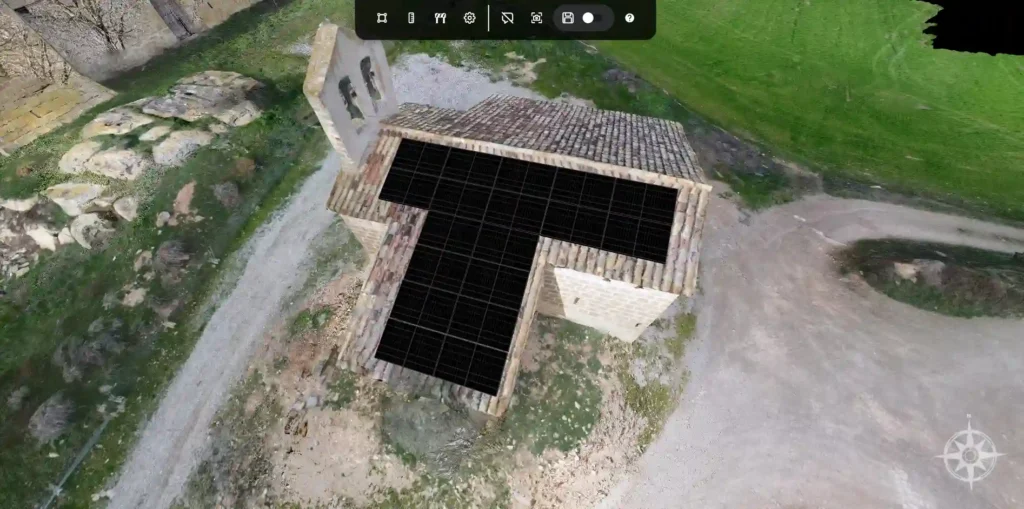
Step 1: Generating a Solar Digital Twin in 15 Minutes
The foundation of any flawless photovoltaic design is the site data. Instead of putting personnel in harm’s way for manual surveys, modern engineering teams utilize drones. But capturing the data is only half the battle; processing it quickly without bottlenecking your engineering team is what truly matters.
With advanced photogrammetric rendering capabilities, a comprehensive drone roof survey can be processed and transformed into actionable 3D data in just 15 minutes. The output isn’t just a pretty picture to show the client; it is a highly accurate solar digital twin. This virtual, interactive replica of the site allows your engineers to inspect every vent, pipe, and roof slope without ever leaving their desks.
Step 2: 1:1 Scale 3D Modeling for Unmatched Precision
When dealing with megawatt-scale rooftop or ground-mounted systems, “close enough” is never acceptable. A discrepancy of just a few centimeters can throw off an entire string of solar panels, leading to last-minute redesigns on the roof.
By utilizing 1:1 scale 3D modeling, the digital twin perfectly mirrors the real world. This level of extreme detail empowers your team to conduct a millimeter-accurate PV design. Every obstacle is captured in true 3D geometry. If your project involves Building-Integrated Photovoltaics (BIPV) or complex wall-mounted arrays, integrating precise 3D facade measurement guarantees that vertical spatial data is just as accurate as your horizontal layouts.
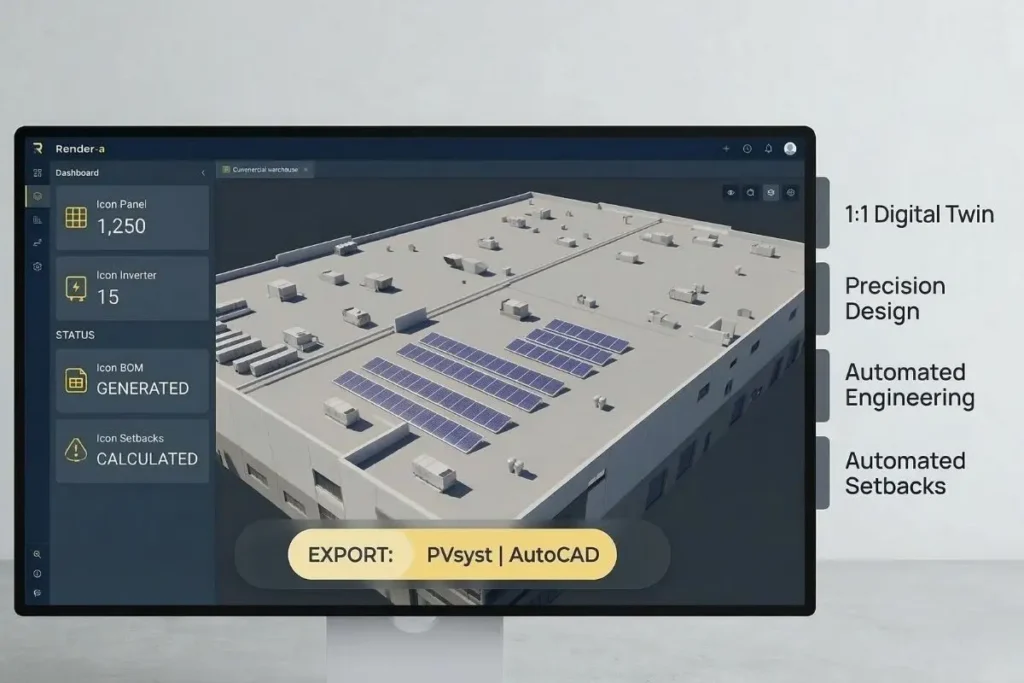
Furthermore, a dedicated software-driven workflow automates the most tedious parts of the job. By applying automated setbacks, the software instantly calculates the required fire lanes, walkways, and obstacle clearances based on strict local regulations. This ensures that your layout is not only optimal for maximum energy yield but also 100% compliant and ready for rapid permitting.
Step 3: Automated Engineering and BOM Generation
Designing the array visually is great, but engineering a bankable project requires robust, data-rich outputs. One of the biggest bottlenecks in traditional solar design is calculating the electrical logic manually.
A comprehensive commercial solar engineering software doesn’t just draw panels; it understands the electrical architecture behind them. As you design your system and define your inverters, the platform automatically generates a detailed Bill of Materials (BOM). It calculates the exact number of modules, the necessary mounting structures, and the cabling lengths required. By automating the BOM through a software-driven engineering workflow, procurement teams can order materials with absolute confidence, knowing there will be zero shortages or massive overages on site.
Step 4: Seamless PVsyst Export and Native AutoCAD Integration
The real magic of an optimized workflow happens in the handoff. To prove the financial viability of a C&I project to investors and stakeholders, you need highly respected, bankable yield simulations.
Render-a’s advanced workflow provides a seamless PVsyst export, allowing you to transfer your highly detailed 3D scene directly into PVsyst for advanced shading and yield analysis. You no longer need to redraw the 3D scene from scratch in PVsyst’s clunky interface. Simultaneously, the finalized 3D layout can be exported natively to AutoCAD. This gives your drafting and engineering team the exact, millimeter-perfect DWG files they need to finalize the construction plan sets and single-line diagrams (SLD).
Stop Guessing, Start Engineering
The solar industry is growing too fast to rely on fragmented tools, manual data entry, and guesswork. By adopting a unified workflow that leverages rapid drone data, creates an interactive digital twin, and integrates directly with industry-standard engineering tools, you completely eliminate the risk of human error.
You achieve a millimeter-accurate PV design that ensures what is drawn on your screen fits perfectly on the roof. No more installation errors, no more costly rework, and no more delayed projects.
Ready to transform your solar workflow?
Experience the difference of true 3D automation. Start your free trial and access the demo platform today to see how our software can streamline your next C&I project.
For more visual breakdowns, watch our workflow in action on YouTube and don’t forget to connect with us on LinkedIn to join the conversation with other forward-thinking solar professionals.