In a recent industry analysis published on Sustainable Media 365, journalist Sebastian Wittag highlighted a critical truth for the modern solar industry: “bankability arises from predictability.”
Investors do not fund solar projects based on optimism; they fund them based on predictable energy yields. When a project’s financial model relies on rough estimates from outdated satellite images or manual tape measurements, the inherent risk is high. The solar industry is rapidly outgrowing flat drawings and moving toward precise data capture to secure project financing and protect profit margins.
Building on this industry consensus, here is why accurate digital planning has become a strict requirement for modern EPCs, installers, and project developers.
The Problem with 2D Approximations
Roofs in both commercial and residential sectors are rarely simple planes. They feature varying pitches, dormers, skylights, and complex shading environments caused by neighboring structures or vegetation. The exact same spatial complexity applies to vertical surfaces that require precise facade measurement for building-integrated photovoltaics (BIPV). Attempting to map these physical realities with 2D planning tools forces engineering teams to make assumptions.
Every assumption introduces a margin of error. When the physical complexity of a building is abstracted into a flat drawing, the likelihood of layout conflicts during the actual installation increases significantly. This leads to unexpected delays, hardware adjustments, and strained client relationships.
Predictability Drives Bankability
In the solar sector, bankability is directly tied to the reliability of a system’s long-term output forecast. Financial models, such as P50 and P90 generation reports, depend entirely on the quality of the input data. Variables like roof tilt, azimuth, module placement, and shading analysis must be exact.
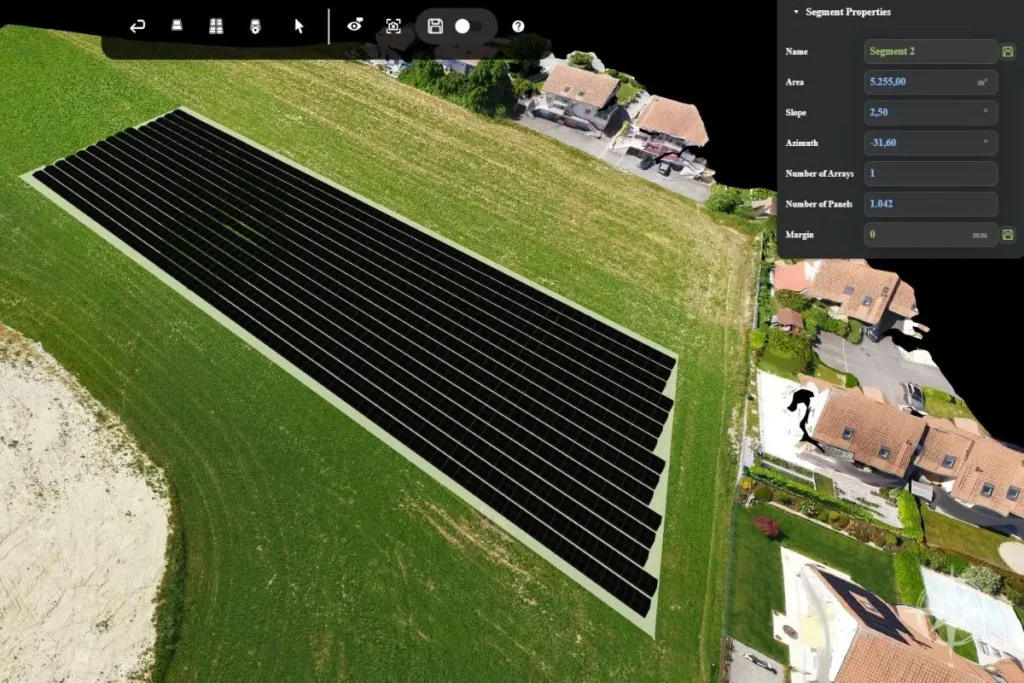
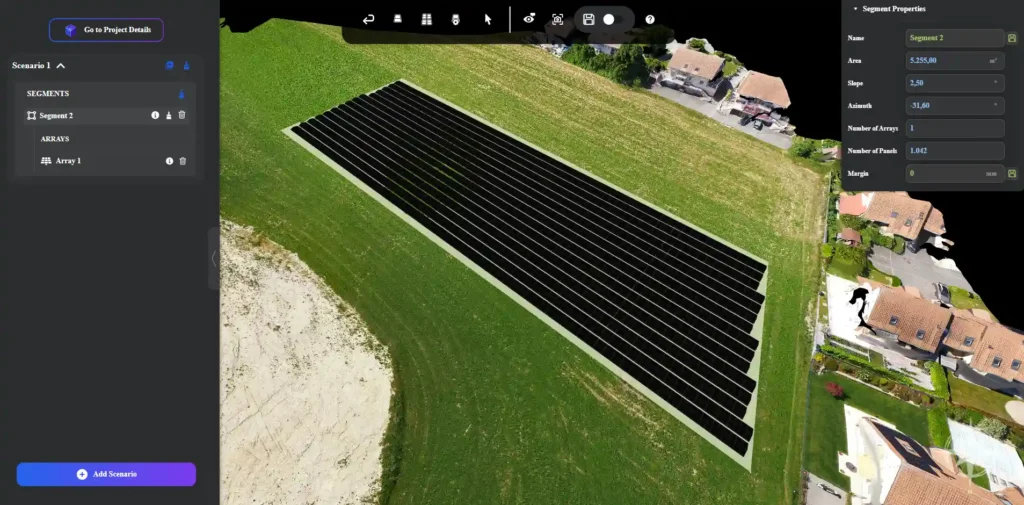
This is where drone roof measurement software changes the equation. By capturing high-resolution aerial data of the site, developers can generate an exact digital replica of the building. This transitions the workflow from estimating dimensions to working within a 1:1 3D modeling environment. When the physical barriers that cause shading are modeled precisely, the gap between the projected energy yield and the actual performance closes.
Tighter yield forecasts translate to lower risk premiums for banks and investors. When the data is indisputable, securing project funding becomes a much faster process.
Reducing Operational Soft Costs
While the cost of solar hardware has stabilized over the last decade, operational expenses commonly referred to as soft costs remain a significant burden on profit margins.
Sending personnel to rooftops for physical measurements is time-consuming, prone to human error, and introduces unnecessary safety liabilities. If the initial measurements are wrong, it guarantees multiple site visits and costly design revisions.
Using drone data eliminates these inefficiencies. Whether you are assessing a residential rooftop or conducting comprehensive 3D land surveying for a ground-mounted PV plant, a single short flight captures all necessary site information. The platform then automates the creation of the geometry. This allows sales and design teams to issue accurate proposals in a fraction of the time, moving the cost structure away from manual labor and toward scalable, digital processes.
Engineering Workflow and Integration
A highly accurate model only adds value if it communicates with the rest of the engineering workflow. Isolated software tools create data bottlenecks.
For 3D solar modeling to be effective, the data must be exportable. The true-to-scale models generated from drone flights need to integrate seamlessly with the simulation tools that engineers already trust, such as PV*SOL, PVsyst, or standard CAD applications. When the entire process from the initial lead to the final electrical design shares the exact same set of accurate spatial data, the output per team member increases considerably.
The shift toward highly accurate digital planning is driven by basic economics. Companies that adopt precise measurement practices will issue faster proposals, reduce their operational costs, and present highly bankable projects to their investors.
Connect with Render-a Stay updated on the latest tools for solar digital planning and workflow automation by following our updates on LinkedIn and watching our real-world 3D modeling processes on our YouTube channel.