

A solar installer we worked with used to send two people out to a site just to measure a roof. Tape measure, laser distance meter, a ladder, sometimes a drone they didn’t fully trust yet. Four hours later, they’d have numbers numbers that occasionally didn’t match what the design team needed once they got back to the office. A second visit followed. Then a third, because the client changed the panel layout and nobody had the extra angles.
That’s not an edge case. It’s the default state of manual inspection on most construction, solar, and surveying projects. And it’s exactly the gap that 3D measurement software was built to close.
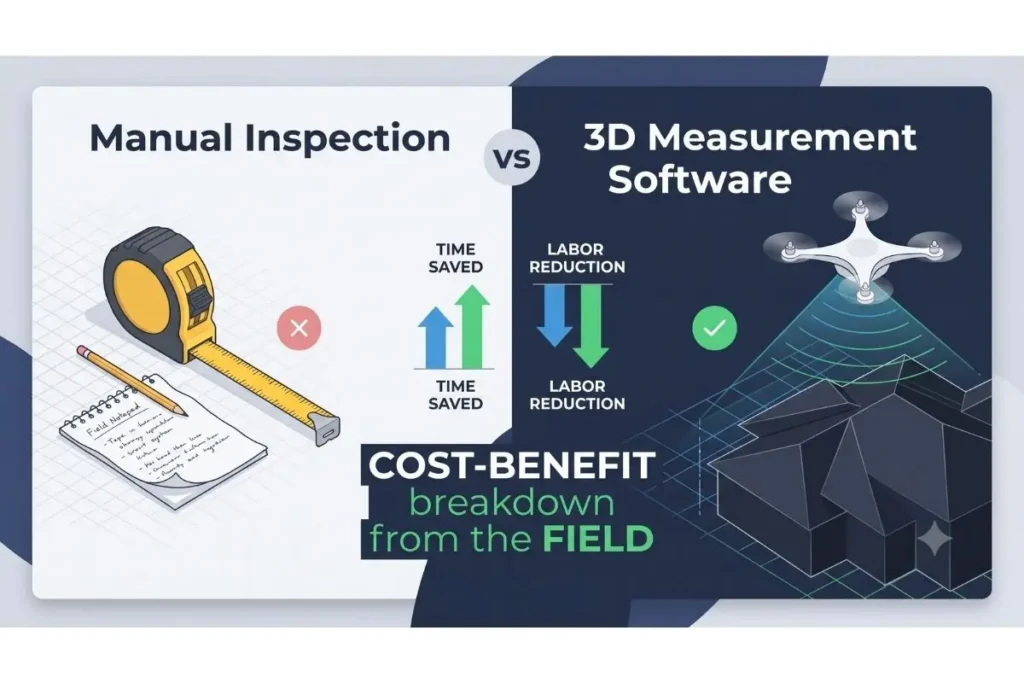
The question isn’t really “which technology is more advanced.” It’s simpler than that: which one gets you accurate, usable data at a cost you can defend to a client or a project manager. Let’s break it down the way we’d break it down for a client deciding between the two.
What Manual Inspection Actually Costs You
On paper, manual inspection looks cheap. Send a technician, bring basic tools, done in a day. In practice, the real cost shows up in places that don’t appear on the initial quote.
Labor time compounds. A single roof or facade measurement can take half a day when done by hand, and that’s before accounting for travel time, weather delays, or a technician getting the wrong access to a section of the building. Multiply that across a portfolio of projects and the hours add up fast.
Rework is the hidden expense. Manual measurements are single-point-in-time snapshots. If a detail gets missed a chimney offset, a shading obstruction, an irregular facade angle someone has to go back. We’ve seen projects where a missed dormer measurement alone pushed a solar proposal delivery back by a week.
Human error scales with complexity. The more irregular the structure, the more room there is for a hand-measured number to be slightly off. On a simple rectangular roof, that might not matter. On a complex commercial facade or a multi-angle industrial roof, a small error early on becomes a real design problem later.
What Are the Risks of Manual Measurement on Site?
Beyond cost, there’s a safety and liability dimension that’s easy to underweight. Manual inspection often requires someone physically walking a roof, climbing scaffolding, or accessing hard-to-reach facade sections. Every one of those steps carries fall risk, and every site visit adds exposure. Insurance and liability considerations aside, most teams would rather keep people off a roof than on one the technology to make that possible already exists.
What 3D Measurement Software Actually Delivers
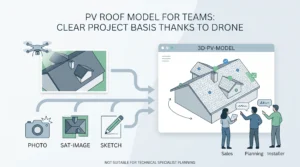
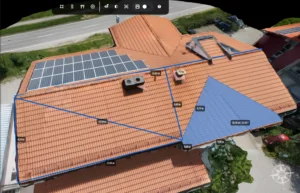
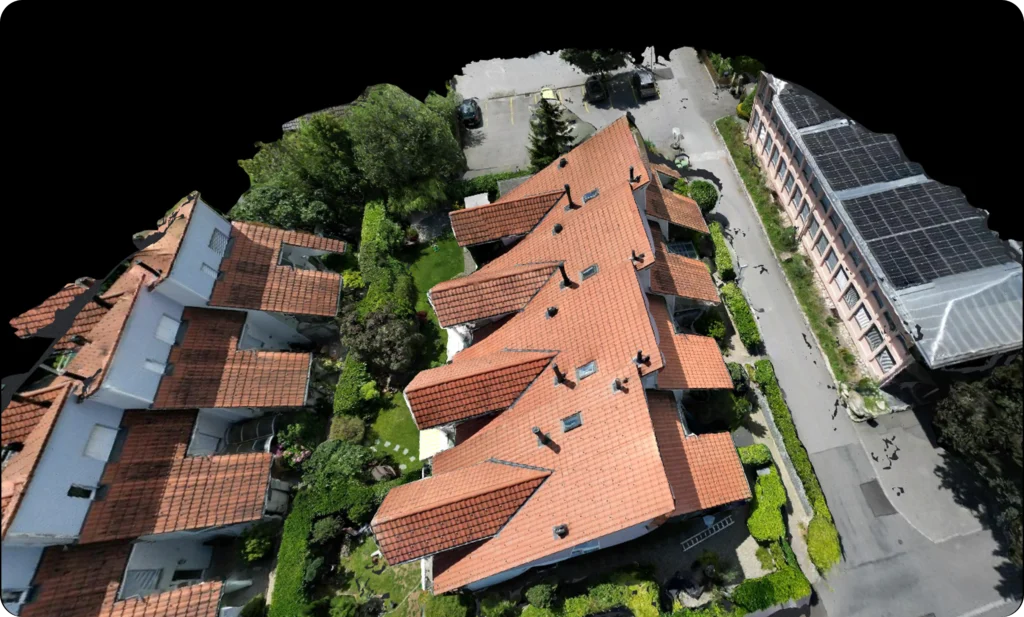
This is where the comparison gets concrete. 3D measurement built from drone-captured imagery and processed into a full digital model replaces the tape measure with a dataset you can revisit, re-measure, and re-use without a second site visit.
On projects we’ve processed, turnaround from drone flight to a usable 3D model typically lands between 30 minutes and 3 hours, depending on how many images the flight produced. That’s a same-day model in nearly every case something that manual inspection, with its multi-visit reality, structurally can’t match.
How Accurate Is 3D Measurement Software Compared to Manual Inspection?
Accuracy is where the software argument gets strongest, not weakest. A drone-based 3D model captures the entire structure at once every angle, every edge, every obstruction rather than the specific points a technician happened to measure by hand. If a design team later needs a dimension nobody thought to check during the site visit, it’s already in the model. Nothing gets left out simply because no one thought to point a tape measure at it.
This matters most on jobs where geometry is complicated. Our facade measurement service exists specifically because manual facade surveys tend to lose accuracy on buildings with recesses, balconies, or non-uniform sections the kind of detail that’s trivial for a 3D model to capture but genuinely difficult to get right by hand from ground level.
| Factor | Manual Inspection | 3D Measurement Software |
|---|---|---|
| Time to first usable data | Half a day to several days (including revisits) | 30 minutes to 3 hours after flight |
| Site visits typically needed | Often 2+ if details are missed | 1 |
| Accuracy on complex geometry | Drops with irregular structures | Consistent across the full structure |
| Re-measurement after the fact | Requires another site visit | Pulled directly from the existing model |
| On-site safety exposure | Higher (roof access, scaffolding) | Lower (drone-based capture) |
| Reusability for other purposes | Limited to what was recorded | Full model reusable for design, proposals, documentation |
Where This Plays Out in Practice
Take solar proposal preparation, one of the areas where the cost of getting measurements wrong is highest. A proposal built on incomplete manual measurements can misjudge panel count, shading, or roof capacity and a client who receives a revised proposal after the fact loses confidence fast. Building the proposal from a full 3D model instead of partial manual notes means the design team is working from the entire roof, not just the sections someone remembered to measure. That’s the logic behind our solar proposal preparation workflow the model comes first, the proposal is built on top of it, not the other way around.
The same pattern shows up in land surveying. Traditional surveying methods capture points; a 3D-based approach captures the terrain as a continuous surface, which makes downstream planning decisions easier to defend when a client asks “how do you know?” Our 3D land surveying process is built around that same principle one flight, one complete dataset, no gaps to explain later.
And on roofs specifically still the most common use case a drone roof survey removes the two biggest manual-inspection costs at once: the safety exposure of climbing the structure, and the risk of missing a measurement that only becomes obvious once the design phase starts.
When Is Manual Inspection Still Better Than 3D Scanning?
It’s worth being honest here, because the answer isn’t “3D software wins in every scenario.” Manual inspection still has a place:
- Very small, simple jobs where a single flat surface needs one or two measurements the overhead of a drone flight may not be worth it.
- Interior work where drone capture isn’t practical and a physical walkthrough is genuinely faster.
- Sites with flight restrictions certain airspace, weather conditions, or property restrictions can rule out drone capture entirely, at least for that visit.
The honest framing is that manual inspection is a tool for small-scale or constrained situations, while 3D measurement is the better default for anything with real complexity, a tight timeline, or a client who’s going to ask detailed questions about the proposal later.
Can 3D Scanning Replace Manual Roof Inspection?
For the majority of roofing, solar, facade, and land-surveying projects yes, in the sense that it removes the need for repeated manual visits and hand-taken measurements as the primary data source. It doesn’t remove human judgment from the process; someone still reviews the model, interprets it, and builds the proposal or design from it. What changes is where the time goes less time spent re-measuring, more time spent on the parts of the job that actually require expertise.
Is 3D Measurement Software Worth the Investment?
Run the numbers on a single revisit avoided the technician’s time, the travel, the delay to the client and it usually covers the cost difference on its own. Run them across a portfolio of projects, where every avoided second visit and every proposal that goes out right the first time compounds, and the case gets stronger, not weaker. The investment isn’t really in the software. It’s in not paying for the same site twice.
If measurement delays or rework are costing you time on solar, roofing, facade, or land projects, it’s worth seeing what a single drone flight can replace. Get in touch with Render-a to see how a same-day 3D model fits into your existing workflow.